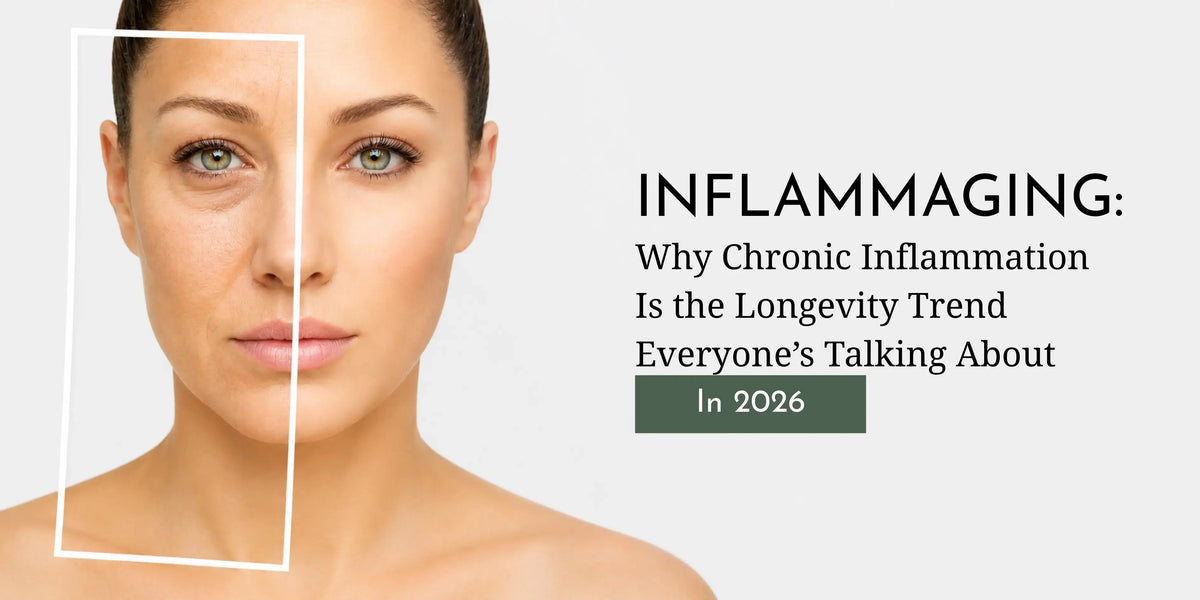
Inflammaging: Why Chronic Inflammation Is the Longevity Trend Everyone's Talking About in 2026
If you've spent any time reading longevity or healthy-ageing content lately, you've probably seen the word "inflammaging" popping up. It's not a typo - it's a real, increasingly researched concept, and it's fast becoming one of the most talked-about ideas in the science of ageing well.
Here's what it means, why researchers think it matters so much, and what you can actually do about it.
What is inflammaging?
Inflammaging is a term combining "inflammation" and "ageing." It describes the chronic, low-grade, persistent inflammation that tends to build up in the body as we get older - distinct from the acute inflammation you get from an injury or infection, which flares up and then resolves.
Acute inflammation is protective - it's your immune system doing its job. Inflammaging is different: it's a low-level, ongoing inflammatory state that doesn't fully switch off, and researchers increasingly link it to many of the conditions we associate with getting older - joint discomfort, reduced mobility, cognitive changes, cardiovascular concerns and slower recovery.
Why is inflammaging suddenly such a big topic?
A few things have converged:
- The research base has matured. Inflammaging has moved from a niche academic term to a well-established framework in ageing science, with a growing body of studies linking chronic inflammatory markers to age-related decline.
- Longevity science has broadened beyond NAD+. Much of the mainstream longevity conversation over the past few years has centred on NAD+ and NMN. Inflammaging represents a parallel - and arguably complementary - angle: instead of only asking "how do we boost cellular energy," it asks "how do we reduce the everyday cellular damage that ageing accumulates in the first place."
- It connects to things people already feel. Unlike some longevity biomarkers that are abstract, inflammaging connects directly to lived symptoms - joint stiffness, fatigue, slower recovery, brain fog - which makes it a far more relatable entry point into healthy-ageing science.
What actually drives inflammaging?
Inflammaging isn't caused by one single thing - it's cumulative, and tends to be driven by a combination of:
- Oxidative stress - the build-up of free radical damage over time, which itself triggers inflammatory signalling
- Diet - particularly diets high in processed foods and low in antioxidant-rich plants
- Chronic psychological stress - sustained cortisol elevation is increasingly linked to inflammatory activity
- Reduced physical activity
- Gut microbiome changes that occur with age
- Cellular senescence - the accumulation of "zombie cells" that stop dividing but don't die, and which secrete inflammatory signals
Because it's multi-factorial, the research consensus is that addressing inflammaging works best through a combination of lifestyle factors and targeted nutritional support - rather than any single intervention.
How plant bioactives target inflammaging
This is where a category of ingredients - plant-derived anti-inflammatory and antioxidant bioactives - has drawn particular research interest, because several have long track records (both traditional and clinical) specifically in this space:
- Curcumin (from turmeric) has one of the largest bodies of research behind it as a natural anti-inflammatory compound, with studies focused on its role in modulating inflammatory pathways.
- Boswellia serrata (frankincense extract) has been studied for its effects on joint comfort and inflammatory response.
- Resveratrol is a polyphenol studied for its antioxidant activity and potential role in cellular protection against oxidative stress.
- Grape seed extract (procyanidins) offers concentrated antioxidant support, helping to counter the free-radical side of the inflammaging equation.
- Piperine (black pepper extract) doesn't act on inflammation directly, but plays a supporting role by significantly boosting the absorption of curcumin and resveratrol - addressing the bioavailability problem that has historically limited how effective these compounds are.
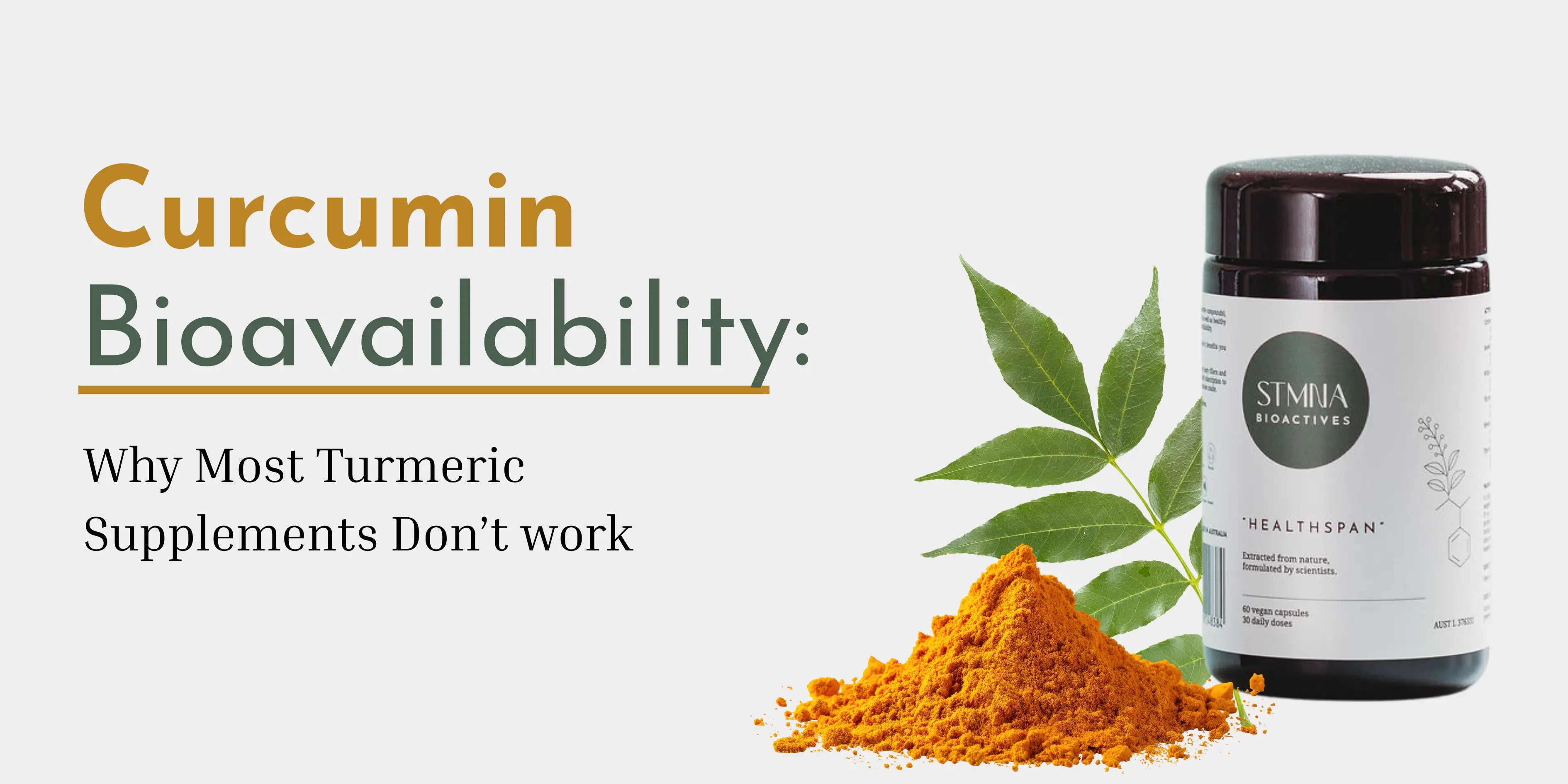
This is essentially the formulation logic behind STMNA's Healthspan supplement: rather than targeting a single symptom, it combines curcumin, boswellia, resveratrol, grape seed extract, ashwagandha and piperine specifically to work across the inflammation–oxidative stress–stress load triangle that underpins inflammaging, with piperine included to help the body actually absorb and use the other actives.
Ashwagandha's inclusion reflects the stress-cortisol link above - as an adaptogen traditionally used to help the body manage stress, it addresses one of inflammaging's key upstream drivers rather than inflammation itself.
What you can do about inflammaging
Nutrition and supplementation are one part of the picture. The broader, evidence-supported approach to managing inflammaging generally includes:
- Prioritising whole, antioxidant-rich foods (vegetables, fruit, healthy fats)
- Regular movement and resistance exercise, which has anti-inflammatory effects independent of weight management
- Prioritising sleep quality, since poor sleep is itself linked to elevated inflammatory markers
- Managing chronic stress
- Considering evidence-based bioactive compounds like curcumin, boswellia and resveratrol, ideally in forms formulated for absorption
FAQ
What is inflammaging in simple terms?
Inflammaging is the chronic, low-grade inflammation that tends to build up gradually in the body with age, distinct from the short-term inflammation you get from an injury. It's increasingly linked by researchers to many common age-related changes, including joint discomfort, fatigue and slower recovery.
Is inflammaging the same as normal ageing?
Not exactly. Inflammaging is one of the biological processes thought to contribute to age-related decline, but it isn't considered an inevitable or unmodifiable part of ageing - diet, stress, activity levels and targeted nutritional support can all influence it.
What foods or supplements help with inflammaging?
Research has focused on antioxidant- and polyphenol-rich compounds such as curcumin, resveratrol, boswellia and grape seed extract, alongside general anti-inflammatory dietary patterns (whole foods, reduced processed food intake) and lifestyle factors like exercise and sleep.
Why is curcumin paired with black pepper (piperine) in supplements?
Curcumin on its own is poorly absorbed by the body. Piperine, the active compound in black pepper, has been shown to significantly increase curcumin's bioavailability, which is why the two are commonly formulated together.
Is inflammaging linked to stress?
Yes - chronic psychological stress is associated with sustained cortisol elevation, which researchers increasingly link to inflammatory activity, making stress management (including via adaptogens like ashwagandha) a relevant part of addressing inflammaging.
Does STMNA's Healthspan supplement target inflammaging?
STMNA's Healthspan formula combines six plant bioactives - curcumin, boswellia, resveratrol, grape seed extract, ashwagandha and piperine - chosen specifically to address the inflammation, oxidative stress and stress-load drivers associated with inflammaging, with piperine included to support absorption of the other actives.
Inflammaging, STMNA Healthspan, best longevity supplement Australia, curcumin vs NAD+, plant bioactives for ageing, chronic low-grade inflammation, healthy ageing supplement Australia, curcumin and piperine benefits, boswellia serrata joint health, resveratrol antioxidant supplement, anti-inflammatory longevity supplement Australia, ashwagandha stress and inflammation, TGA-listed longevity supplement, natural anti-inflammatory supplement vs NMN, oxidative stress supplement, cellular senescence ageing, gut microbiome and inflammaging, what is inflammaging, supplements for inflammaging Australia