Antioxidant Supplements for Cellular Protection & Healthy Ageing
Antioxidants and Why Cellular Protection Is Central to Healthy Ageing
When we talk about ageing well and longevity, the conversation often focuses on lifestyle habits such as diet, exercise and sleep. These factors are undeniably important, but beneath them all lies something much smaller and often overlooked – the health of our cells.
Every system in the body depends on the integrity of the cells that it’s made of. As we age, the ability of these cells to protect and repair themselves from damage becomes one of the most important factors influencing how well we age.
At the cellular level, ageing is influenced by the gradual accumulation of microscopic damage that occurs as our cells interact with their environment. Every day, our cells are exposed to metabolic activity, environmental stressors and inflammatory signals that can affect their structure and function. The body has sophisticated antioxidant systems designed to repair and defend against this damage, but as we age these protective mechanisms can become less efficient.
Understanding Oxidative Stress and the Link to Antioxidants
One of the primary drivers of cellular damage is a process known as oxidative stress.
Oxidative stress occurs when unstable molecules called free radicals, or reactive oxygen species (ROS), build up faster than the body can neutralise them. These molecules are naturally produced during normal metabolic processes such as energy production. However, they can also increase in response to common environmental exposures including pollution, ultraviolet radiation, psychological stress, tobacco smoke and highly processed diets.
When free radicals build up in the body, they can interact and damage key cellular structures. These include proteins, lipids and even DNA. Over time, this damage may interfere with normal cellular function, slowing tissue repair, altering inflammatory responses and placing greater strain on the systems responsible for maintaining long-term health.
The Role of Antioxidants in Cellular Defence
This is where antioxidants play an important role.
Antioxidants act as the body's protective shield against oxidative stress. They stabilise free radicals before they have the opportunity to damage healthy cells. While the body produces its own antioxidants, such as glutathione and vitamin C, modern lifestyles often place greater demand on these systems than they can comfortably manage.
Supporting antioxidant intake through diet, rich in berries and carotenoids, and antioxidant supplements helps maintain this protective balance. By strengthening the body's defence systems, antioxidants contribute to improved cellular resilience and help support energy production, tissue repair and overall metabolic stability.
Antioxidants and Plant Compounds That Support Cellular Protection
Many of the most studied antioxidants in nutritional science come from plants, where they evolved to protect plant tissues from environmental stress.
Several plant-derived bioactive compounds have been widely researched for their ability to support antioxidant defences in humans.
-
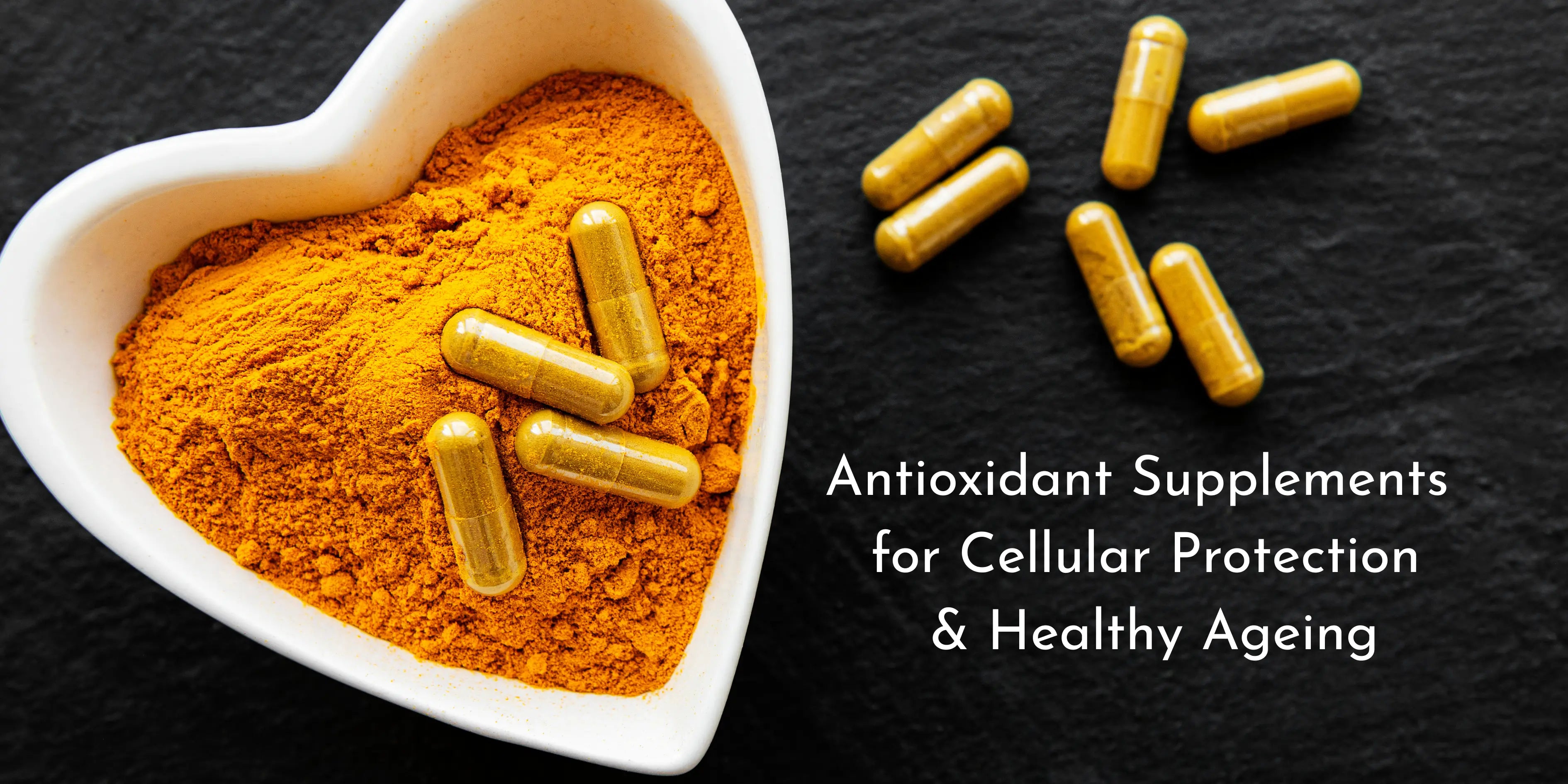
Curcumin: the active compound found in turmeric, is known for its dual role in supporting antioxidant activity and regulating inflammatory pathways.
-
Resveratrol: a polyphenol found in grape skins, has gained significant attention in longevity research due to its ability to support cellular protection and metabolic health.
-
Grape seed extract: contains a concentrated source of procyanidins, powerful antioxidants that help protect collagen structures and support vascular health.
Together, these compounds offer multi-layered support for the body's natural antioxidant defence systems.
This is the approach behind our supplement Healthspan by STMNA Bioactives, which combines carefully selected plant bioactives into a therapeutic formula to help support cellular protection and resilience against everyday oxidative stress.
Learn more about antioxidants Healthspan here.
Supporting Healthspan Through Consistent Protection
Protecting cellular health is not about a quick fix but about maintaining consistent support over time. As the body is continually exposed to oxidative stress, strengthening antioxidant defences can help reduce cumulative cellular damage and support the biological systems responsible for energy production, recovery and resilience.
By prioritising cellular protection, individuals can help support not only how long they live, but how well their body continues to function throughout the ageing process.
Antioxidant FAQ's
What is cellular protection and why is it important for healthy ageing?
Cellular protection refers to the body’s ability to defend cells against everyday damage caused by metabolism, environmental stressors such as tobacco smoke, and inflammation. It matters because healthy ageing depends on the resilience and function of the cells that make up every tissue and organ.
What is oxidative stress?
Oxidative stress occurs when free radicals build up faster than the body can neutralise them. Over time, this imbalance can contribute to cellular damage and place stress on the systems involved in repair and recovery.
How does oxidative stress affect the body?
Oxidative stress can affect proteins, lipids and DNA. Over time, this may interfere with cellular function, slow tissue repair and influence inflammatory responses.
What do antioxidants do for cellular health?
This supports the body’s natural defence systems and helps maintain cellular resilience.
Can antioxidant supplements support healthy ageing?
Antioxidant supplements may help support healthy ageing by strengthening the body’s defence against everyday oxidative stress, especially when paired with a balanced diet rich in berries and carotenoids, and a healthy lifestyle.
Which plant compounds are commonly used for antioxidant support?
Curcumin, resveratrol and grape seed extract are commonly used plant compounds researched for their antioxidant and cellular protection benefits.
How does curcumin support cellular protection?
Curcumin supports antioxidant activity and helps regulate inflammatory pathways, making it a valuable ingredient for cellular defence.
Why is resveratrol used in longevity-focused supplements?
Resveratrol is widely used in longevity-focused formulas because it has been researched for its role in supporting cellular protection and metabolic health.