Top 5 Wellness Trends in 2026: Longevity, Nervous System Health & Sustainable Wellness

Unpack the Top 5 Wellness Trends
If 2024 was the year of “optimisation”…and 2025 was the year of “overwhelm”…then 2026 is the year wellness trend finally becomes sustainable.
In 2026, wellness trends are shifting away from extreme routines and quick fixes, and toward sustainable, evidence-informed practices that reduce stress, lower inflammation, and support long-term health. From longevity and nervous system regulation to biomonitoring and personalised women’s wellness, the biggest trends are all pointing to the same truth
‘Your body doesn’t need more hacks - it needs less stress, less inflammation, and more consistency.’
Because nothing works when your system is overloaded.
Not your diet. Not your training. Not your sleep routine. Not your motivation.
So let’s break down the Top 5 Wellness Trends of 2026 - why they’re emerging, why people are paying attention, how they improve health… and exactly how STMNA fits into them (without feeling salesy).
Wellness Trends 1-5
1) Longevity Goes Mainstream (and “Healthspan” Becomes the New Flex)
People don’t want to live longer - they want to feel good longer.
Longevity used to be niche - something biohackers obsessed over with spreadsheets, ice baths, and 36 supplements.
In 2026, Longevity has matured.
It’s no longer just about anti-ageing or avoiding wrinkles. Instead, it’s about energy, mobility, mental clarity, strength and feeling like yourself for longer. This shift toward healthspan is changing the way people think about wellness altogether. In short, the number of years you live in good health is - Healthspan
And here’s the “aha moment” most people are waking up to:
Your future health isn’t built by extreme routines. It’s built by consistent ones.
Why this trend is emerging
Because more people are realising you can’t “fix it later.”
You can’t reverse inflammation overnight.
You can’t undo years of stress in one weekend reset.
Longevity is becoming a daily decision, not a later-life panic.
How does it improve health
When approached properly, longevity-focused habits tend to support metabolic health, reduce inflammation over time, improve recovery, strengthen the body, and support better sleep quality.
Where STMNA fits
This is literally STMNA’s DNA!
In 2026, people are no longer looking at products that promise results ‘in 7 days’ they are gravitating to the products that are designed for compounding benefits through simple daily routines.
STMNA supports that exact shift.
STMNA angle: Healthspan isn’t a goal - it’s a daily ritual.
2) Nervous System Regulation Becomes the Foundation of Modern Wellness
Because being ‘healthy’ while dysregulated is basically impossible.
If there’s one trend that’s rewriting wellness in 2026 - it’s nervous system regulation.
We are finally moving past the idea that stress is just something you “think away.” Stress is a physiological load your body carries, and when your nervous system is constantly stuck in fight-or-flight, everything starts to feel harder.
Digestion can become sluggish, hormones more reactive, cravings stronger and sleep lighter and broken. Inflammation often increases, while recovery slows down.
That’s why tools like breathwork, vagus nerve activation, somatic practices and trauma-informed wellness are moving into the mainstream.
The moral of the story is that: most people aren’t lazy. They’re overloaded.
How nervous system regulation improves health
Regulating the nervous system can support:
- Deeper, more restorative sleep
- Calmer mood
- Reduced stress reactivity
- Improved recovery
- Stronger immune resilience
Where STMNA fits
The nervous system doesn’t exist in isolation - it’s tied to inflammation, immunity, recovery and energy.
STMNA becomes the internal daily support layer underneath this trend:
- Anti-inflammatory support
- Stress resilience support
- Recovery support
When the body is calmer, everything works better.
3) Biomonitoring Gets Smarter (Data-Informed, Not Data-Obsessed)
People want results they can measure - without spiralling.
Tracking health used to be a niche wellness flex. In 2026, it’s normal.
We are finally moving past the idea that stress is just something you “think away.” Stress is a physiological load your body carries, and when your nervous system is constantly stuck in fight-or-flight, everything starts to feel harder.
Digestion can become sluggish, hormones more reactive, cravings stronger and sleep lighter and broken. Inflammation often increases, while recovery slows down.
That’s why tools like breathwork, vagus nerve activation, somatic practices and trauma-informed wellness are moving into the mainstream.
We as the consumers want: proof, progress, and personalisation. And increasingly, demanding exactly that.
With that in mind we want to point out that the future of wellness isn’t perfection - it’s pattern recognition.
Where STMNA fits
When people are measuring change, the worst thing they can do is change 50 things at once.
STMNA becomes the “constant variable”:
- One daily ritual
- One consistent baseline
- Something to track against over 90 days
Let consistency do the talking.
4) Digital Detox and Analog Wellness: Reducing Overstimulation in 2026
Because the most underrated wellness tool in 2026 is silence.
This trend goes deeper than just “less screen time.”
People aren’t just tired…they’re overstimulated. This is not incidental; it’s a pattern we’re seeing more and more clearly.
The cost of constant stimulation shows up as:
- Struggling to fall asleep
- Anxiety spikes
- Irritability
- Brain fog
- Attention fragmentation
- Dopamine-seeking habits
So wellness is moving toward “analog”:
- No phone in the bedroom
- Morning routines without scrolling
- Journaling
- Walking
- Reading
- Slower mornings
And the truth people are starting to face is blunt:
If you start your day with your phone, you’re not starting your day. You’re reacting to it.
Where STMNA fits (so naturally it’s almost unfair)
This is exactly where the Morning Ritual positioning becomes powerful.
STMNA can become the physical anchor habit that replaces the scroll.
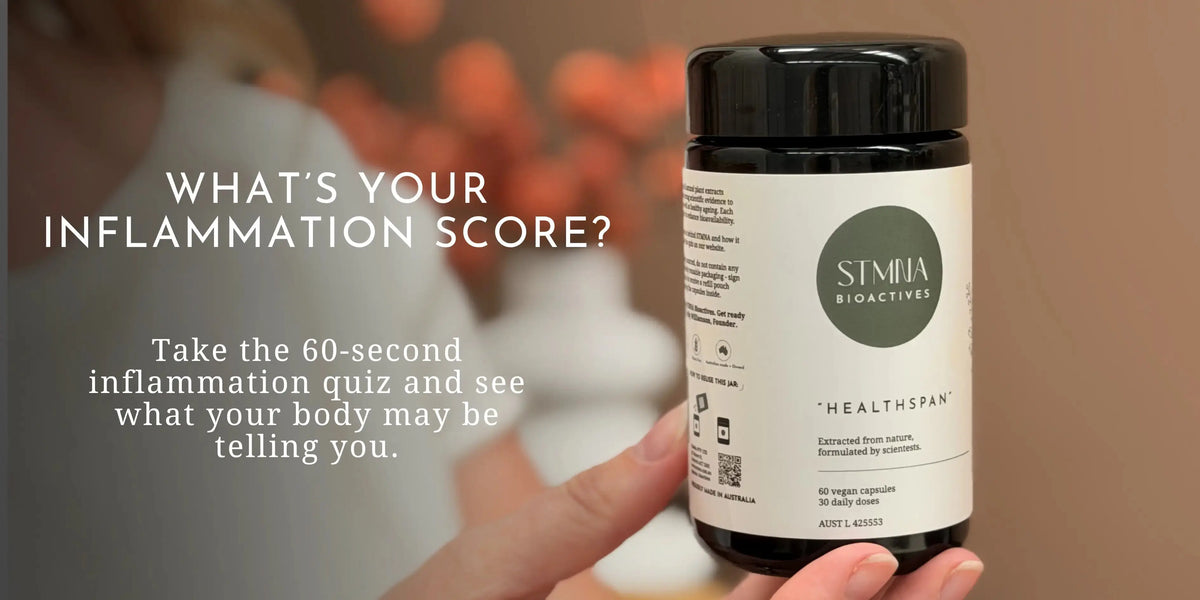
Swap the scroll for a ritual: 2 STMNA Healthspan capsules, a warm drink, and 10 minutes of calm.
5) Women’s Wellness Becomes Personalised (Cycles, Hormones & Life Stage Support). Gentlemen, take note.
Because women are done being told it’s “normal” to feel exhausted.
This is the trend set to dominate the wellness industry in 2026, and it aligns beautifully with STMNA’s audience.
Women are no longer accepting constant fatigue, bloating, mood swings, inflammation, brain fog and low energy as “normal.” They’re asking smarter questions about what their bodies actually need at different life stages.
More women are recognising that burnout, nervous system overload, hormonal shifts and inflammation often overlap, making everything feel harder than it should.
The real insight is this: Most women don’t need more discipline. They need more support.
Not just for hormones alone, but for the foundation underneath hormone health: inflammation balance, stress resilience, recovery and cellular wellbeing.
Why this trend is emerging
Because women are demanding better education, personalised wellness strategies and practical support that fits real life.
And because modern life has created a perfect storm:
high stress + environmental load + constant stimulation + little time for recovery.
Where STMNA fits
STMNA fits here naturally because it supports women under load.
Not as a quick fix.
Not as an artificial energy hit.
But as a consistent base:
- Inflammation response support
- Stress resilience support
- Recovery support
- Healthspan / cellular wellness support
STMNA angle: Support your body through the load - so you feel like yourself again.
The Real Takeaway: These 5 Trends Are Actually One Trend
If you strip away the marketing language…
All five trends are saying the same thing:
2026 wellness is about reducing overload and building foundations.
- Longevity = compounding habits
- Nervous system regulation = stress capacity
- Biomonitoring = personalised wellness
- Digital detox = lowering stimulation load
- Women’s wellness = support through modern life stages
And that’s why STMNA makes sense across all five.
Because STMNA isn’t a trend product.
It’s a trend-proof foundation.
FAQ: Wellness Trends, Longevity & Nervous System Support (2026)
What are the top wellness trends in 2026?
The top wellness trends in 2026 include longevity/healthspan, nervous system regulation, smart biomonitoring (wearables + bloodwork), digital detox/analog wellness, and personalised women’s wellness focused on hormones and life stage support.
What is healthspan vs lifespan?
Lifespan is how long you live.
Healthspan is how long you live in good health - with energy, strength, mobility and mental clarity. Healthspan focuses on quality of life, not just years lived.
How do you improve longevity naturally?
You can improve longevity naturally by prioritising:
- strength training and muscle maintenance
- reducing chronic inflammation
- managing stress and sleep quality
- consistent nutrition habits
- supplementation that supports recovery and cellular health
What does nervous system regulation mean?
Nervous system regulation refers to supporting your body’s ability to shift out of chronic fight-or-flight (stress mode) and into rest-and-digest. It includes breathwork, somatic practices, sleep routines, and reducing physiological stress load.
How does stress affect inflammation?
Chronic stress can increase inflammation in the body by raising cortisol and disrupting sleep, digestion, and immune balance. Over time, this can contribute to fatigue, low mood, poor recovery and overall health decline.
What are the best supplements for longevity and healthspan?
Supplements commonly associated with longevity support include plant bioactives and compounds that support inflammation balance, stress resilience and cellular health. The best approach is consistency - using supplementation to complement a healthy lifestyle rather than replace it.
Do wearables actually help improve health?
Yes - wearables can help by tracking patterns like sleep quality, stress response and recovery. The key is using data as feedback (not obsession). Smart tracking helps people notice trends and make lifestyle changes over time.
What is analog wellness?
Analog wellness is a growing trend focused on reducing screen exposure and overstimulation. It includes digital detox habits such as screen-free mornings, journaling, walking, reading, and device-free bedrooms to improve sleep and mental clarity.
Why is women’s wellness trending so strongly in 2026?
Women’s wellness is booming because more women are seeking personalised support for hormones, cycle shifts, perimenopause, energy changes, and stress load. This trend reflects a broader shift away from generic wellness advice toward life stage specific health strategies.