Ultra-Processed Food and Inflammation: What the NOVA Classification Actually Reveals
Ultra-processed foods are strongly linked to chronic low-grade inflammation, through mechanisms including disrupted gut microbiome, blood glucose spikes, and additives and emulsifiers that can irritate the gut lining. This connection is best understood through the NOVA classification system, the framework researchers now use to separate genuinely processed food from food that has been industrially reformulated beyond recognition.
If you have felt puffier, foggier, or more fatigued on weeks where takeaway and packaged snacks crept back into your routine, this is likely why. It is not really about calories. It is about what the food is doing to your inflammatory response once it is inside you.
What Is the NOVA Classification System?
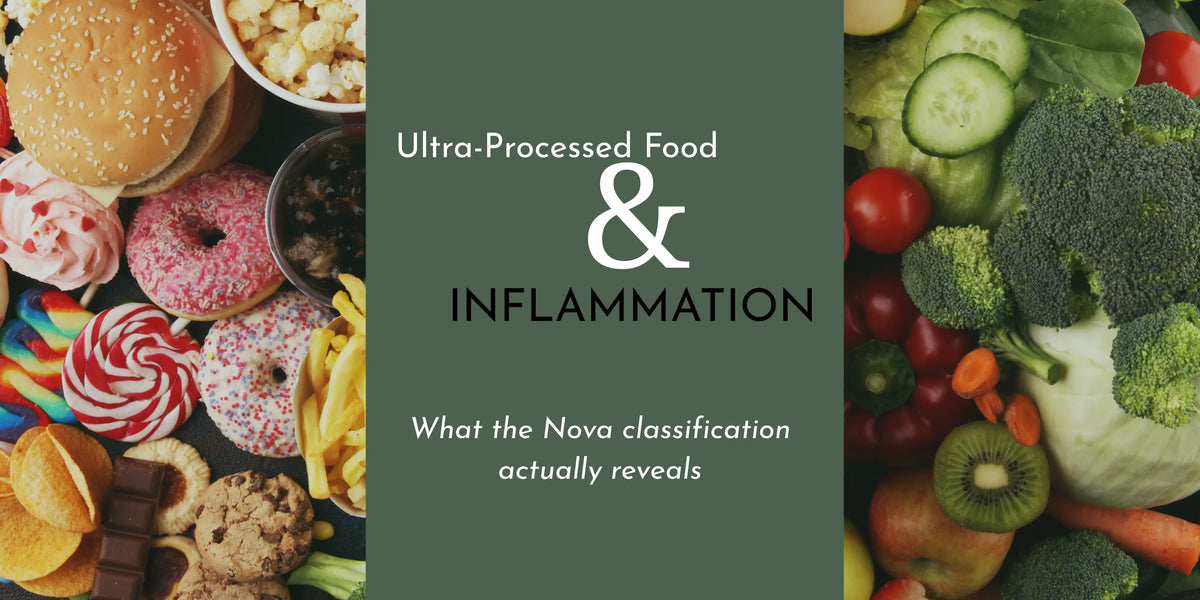
NOVA groups food into four categories based on the degree and purpose of processing, not nutrient content alone:
- Group 1: Unprocessed or minimally processed foods - vegetables, fruit, eggs, plain meat, milk
- Group 2: Processed culinary ingredients - oils, butter, sugar, salt
- Group 3: Processed foods - canned vegetables, cheese, freshly made bread
- Group 4: Ultra-processed foods - packaged snacks, soft drinks, instant noodles, most breakfast cereals, reconstituted meat products
Group 4 is where the inflammation research concentrates. These products typically combine refined starches, added sugars, sweeteners, seed oils, and a list of additives (emulsifiers, stabilisers, flavour enhancers) that do not appear in a home kitchen. It is this additive load, more than any single nutrient, that appears to be the driver.
How Ultra-Processed Foods Drive Inflammation
Gut barrier disruption. Emulsifiers such as carboxymethylcellulose and polysorbate-80, common in packaged sauces, ice cream, and processed bread, have been shown in research to thin the protective mucus layer of the gut. A thinner mucus layer allows bacterial components to cross into tissue more easily, triggering an immune response.
Blood glucose volatility. Ultra-processed carbohydrates are typically stripped of fibre and rapidly absorbed. Repeated glucose spikes and crashes are associated with elevated inflammatory markers, including C-reactive protein (CRP), over time.
Microbiome shifts. Diets high in Group 4 foods and low in fibre reduce the diversity of gut bacteria that produce short-chain fatty acids like butyrate, which normally help regulate inflammation. Less fibre in, less butyrate produced, less anti-inflammatory signalling downstream.
Oxidative load from repeated refined seed oil exposure. Many ultra-processed snack and fried foods are cooked in or contain reheated refined oils, which can generate oxidative by-products linked to inflammatory pathways.
The Australian Research Picture
Australian dietary surveys have consistently found that ultra-processed food makes up close to 40 per cent of average daily energy intake for adults, and considerably more for teenagers. This is broadly in line with patterns seen in the UK and US, where longitudinal cohort studies have linked higher NOVA Group 4 intake to elevated CRP and increased risk of inflammatory and metabolic conditions over time.
Signs Your Body Is Inflamed From Diet
Low-grade inflammation from diet rarely announces itself directly. It tends to show up as:
- Bloating or digestive discomfort after meals
- Skin flare-ups or breakouts that do not track with product changes
- Joint stiffness, particularly in the morning
- Energy crashes two to three hours after eating
- Brain fog that lifts on cleaner eating weeks
None of these are diagnostic on their own, but a pattern across several is worth paying attention to.
Practical Swaps That May Help Reduce Inflammatory Load
Cutting all processed food is not realistic for most people, and it is not necessary. The research points to a dose-response relationship, meaning reducing Group 4 intake, even partially, produces measurable benefit.
- Swap packaged muesli bars for fruit and nuts
- Choose bread from a bakery over shelf-stable supermarket loaves where the ingredient list is short
- Cook with olive or avocado oil instead of reheated seed oil blends
- Batch-cook a base protein and vegetable each week to reduce reliance on packaged convenience meals
- Read for emulsifiers (carrageenan, polysorbate, carboxymethylcellulose) as a proxy for processing degree, not just sugar content
Where Bioactives Fit Alongside Diet Change
Diet quality is the foundation. No supplement offsets a consistently high ultra-processed diet, and any framing that suggests otherwise is not being honest with you. But for people actively reducing UPF intake and rebuilding gut and inflammatory resilience, targeted bioactives can support that repair process rather than replace it. Curcumin works on inflammatory pathway modulation, while omega-3s support the body's active resolution of inflammation rather than just suppressing it, which is a different mechanism to a dietary shift alone.
STMNA Bioactives formulations were built around this kind of layered, whole-system support, which is part of why they sit well alongside a diet change rather than as a substitute for one. If you are cutting back on packaged and processed food, the more useful question isn't which supplement to add, but which ones are actually doing something different to what the diet change is already doing, so you are not paying for overlap.
Ready to support your body's inflammatory resolution process?
Healthspan combines curcumin, boswellia, resveratrol, grape seed extract, ashwagandha and piperine in one ARTG-listed formula, designed to work alongside a diet change, not instead of one. If you're already cutting back on ultra-processed food, Healthspan targets the inflammatory pathways your diet shift alone doesn't reach.
Shop Healthspan and use code HELLO15 for 15% off your first order.
Frequently Asked Questions
What is the NOVA classification system? NOVA is a food classification framework that groups foods into four categories based on the extent and purpose of industrial processing, ranging from unprocessed foods to ultra-processed products formulated with additives not used in home cooking.
Do ultra-processed foods definitely cause inflammation? Research shows a strong and consistent association between higher ultra-processed food intake and elevated inflammatory markers such as CRP, largely through gut barrier disruption, blood sugar volatility, and reduced fibre intake. It is an association backed by plausible mechanisms, not a single proven direct cause for every individual.
How much ultra-processed food is too much? There is no universal cut-off, but research suggests the relationship is dose-dependent, meaning any reduction in ultra-processed intake tends to be associated with lower inflammatory markers over time. Reducing frequency rather than aiming for zero is a more sustainable approach.
Can supplements offset a high ultra-processed diet? No single supplement can fully offset a consistently high ultra-processed diet. Bioactives like curcumin and omega-3 can support the body's inflammatory resolution processes, but they work best alongside dietary changes rather than in place of them.
What are the first foods to cut to reduce inflammation? The highest-impact changes tend to come from reducing packaged snack foods, sweetened drinks, and reheated fried foods, since these combine refined carbohydrates, emulsifiers, and oxidised oils in a single product.